After 200 performances, McGegan’s Messiah still fills halls
Nicholas McGegan's December has been devoted to one glorious pursuit: conducting Handel's Messiah across four American cities. After well over 200 performances spanning decades, he remains convinced that the work never grows stale—because it's never truly the same twice. Each orchestra brings its own character, each group of soloists discovers something new in Handel's lines, and every audience gives the music fresh energy. This year's tour—spanning Milwaukee, Kansas City, St. Louis, and Tucson—demonstrates why McGegan remains one of the most trusted interpreters of this beloved oratorio.
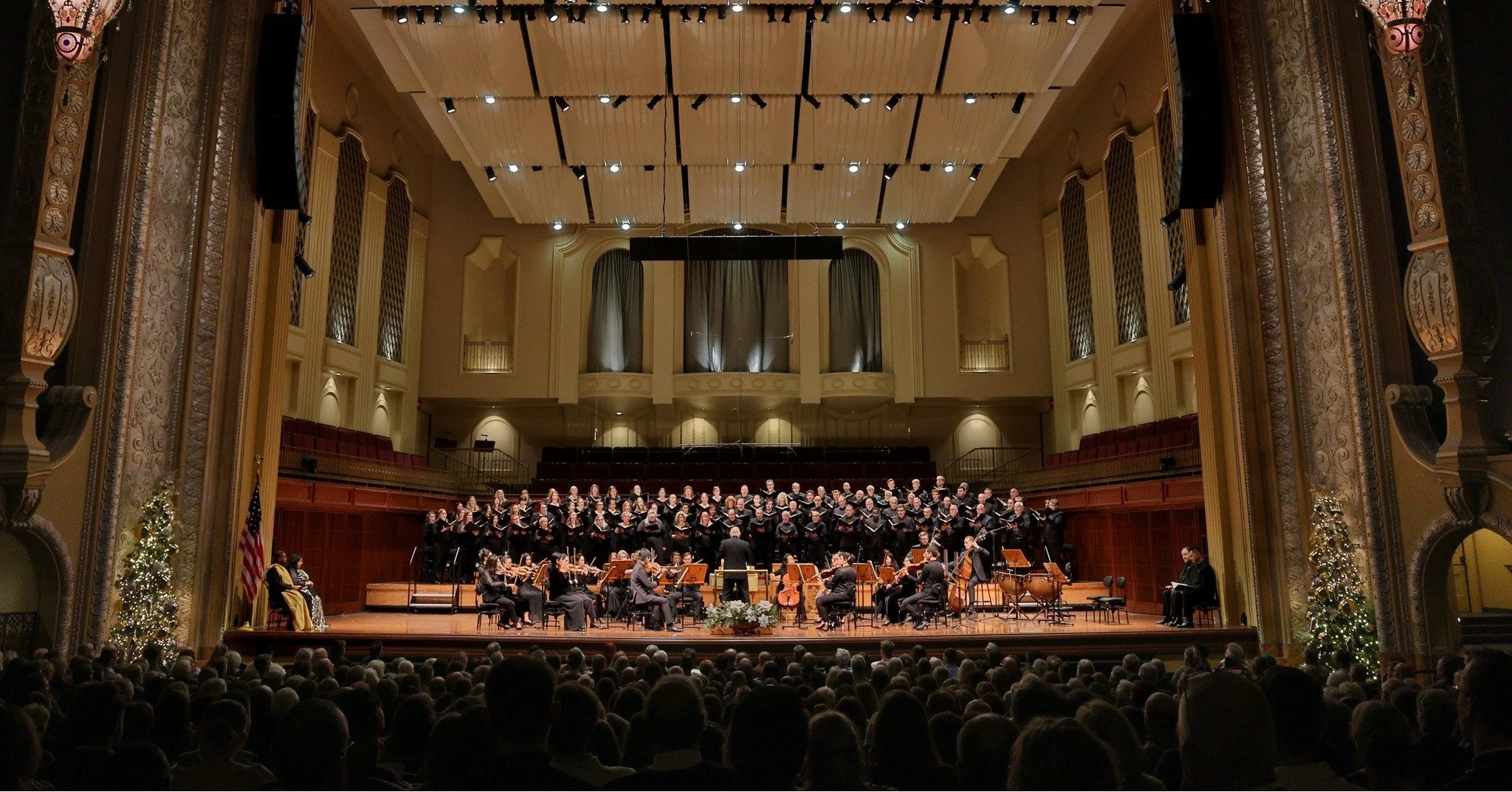
McGegan conducts the Milwaukee Symphony Orchestra and Chorus
A Winter Journey Through Handel's Masterpiece
McGegan's four-city Messiah tour represents both homecoming and discovery. In Milwaukee, where he first conducted forty years ago in 1985, he returned to the beautifully restored Bradley Symphony Center to work with the splendid Milwaukee Symphony Orchestra and Chorus—making time between rehearsals for the Milwaukee Art Museum, one of his favorite spots in the city. The Milwaukee performances generated substantial press coverage, with Milwaukee Magazine, Wisconsin Public Radio, and OperaWire all featuring his insights on the work.
Kansas City brought him back to an orchestra he's worked with for more than thirty years—long enough to have conducted in the original Liberty Hall before the ensemble moved to its current home. When not on the podium in this city, McGegan gravitates toward the Nelson-Atkins Museum of Art, which he considers one of the world's great collections, particularly for its Oriental art.
St. Louis holds special significance: in 1986, McGegan conducted his very first complete Messiah there with the St. Louis Symphony, featuring soprano Lorraine Hunt in Powell Hall. Nearly forty years later, he returned to that same hall—now completely renovated—to work again with musicians and chorus members he's known for decades. Having lived in St. Louis from 1979 to 1985, McGegan calls it his "second home" in the United States, and his long relationships with the orchestra and chorus made this homecoming particularly meaningful.
The tour's final stop brings McGegan to Tucson—new territory for his Messiah travels, offering what he calls "a little bit of sunshine at the end" of this winter journey.
What connects these diverse performances is McGegan's interpretive approach: he ensures the text remains front and center, creating a strong dramatic flow through each of the three parts rather than treating the work as disconnected movements. Handel was a dramatist of genius, and McGegan's conducting brings that out. He works collaboratively with soloists, allowing their individual strengths and instincts to shape each performance. The result is music that feels less like a museum piece and more like the living, breathing work Handel intended—with faster tempi than older performances, smaller forces than the "mega-Messiahs" of decades past, and an approach that prizes vitality over stodginess.
The work itself is no easy feat: the chorus parts require great flexibility of voice, soloists need strong coloratura technique, and the violin parts are genuinely virtuoso. But McGegan finds Messiah deeply moving on a human level—the journey through the depths of pathos in the second part to the glories of the final “Amen” stirs something profound, regardless of one's religious convictions.
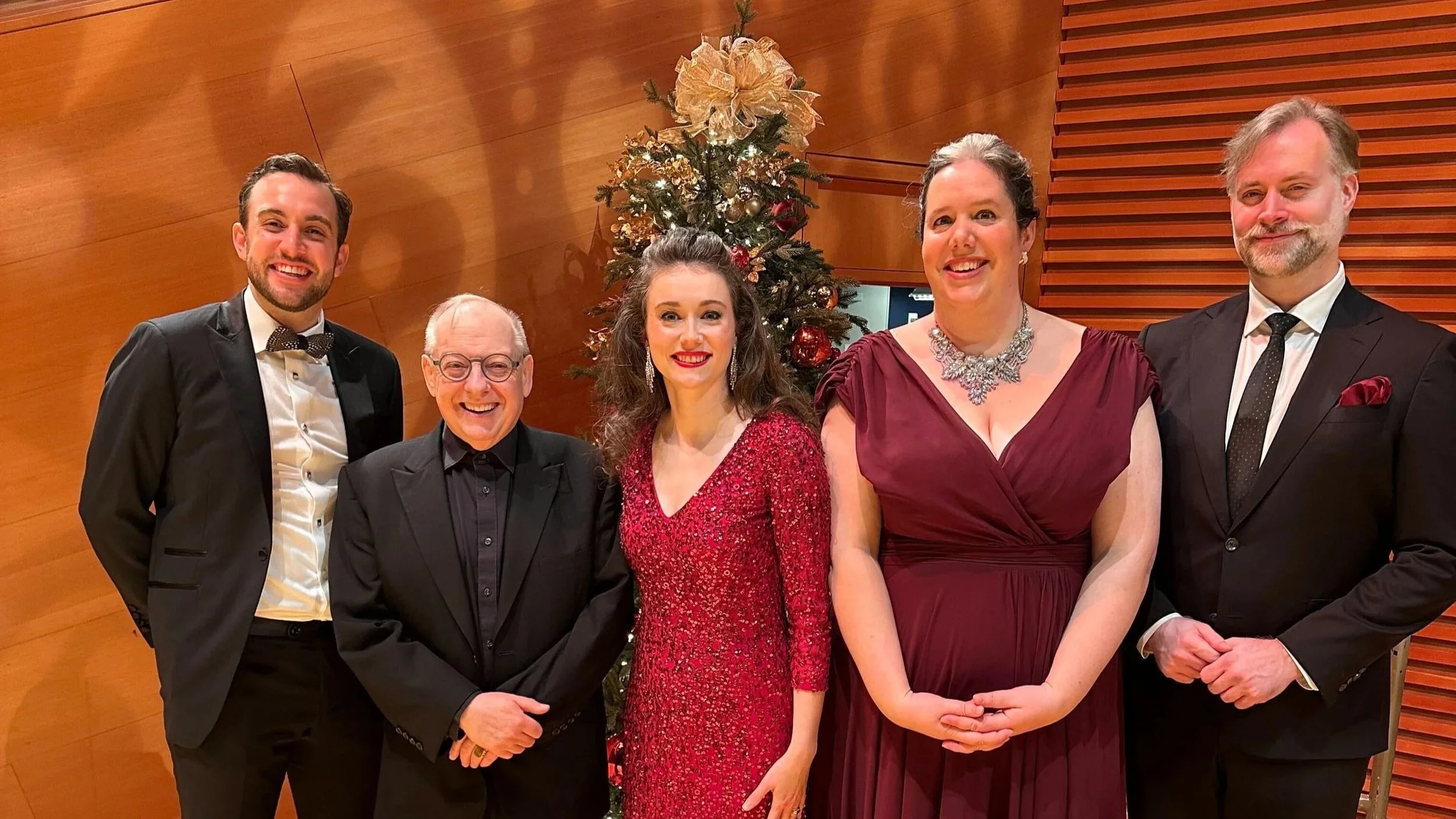
Nic with soloists at the Kansas City Symphony. L-R: James Reese, Nic, Nola Richardson, Sara Couden, Paul Max Tipton.
Postcards from the Road
Throughout this Messiah tour, McGegan has been sharing video reflections from each stop—intimate glimpses into what it's like traveling with Handel's masterpiece across the country.
Tour Overview — McGegan introduces the four-city journey and what makes each orchestra unique.
Milwaukee Symphony Orchestra — Returning to the city where he first conducted forty years ago.
Kansas City Symphony — Reflections on more than thirty years with this vibrant musical community.
St. Louis Symphony Orchestra — Returning to Powell Hall, where he conducted his very first complete Messiah in 1986.
Tucson Symphony Orchestra — Looking ahead to the tour's final performances.
Follow @nicholasmcgegan on Instagram.
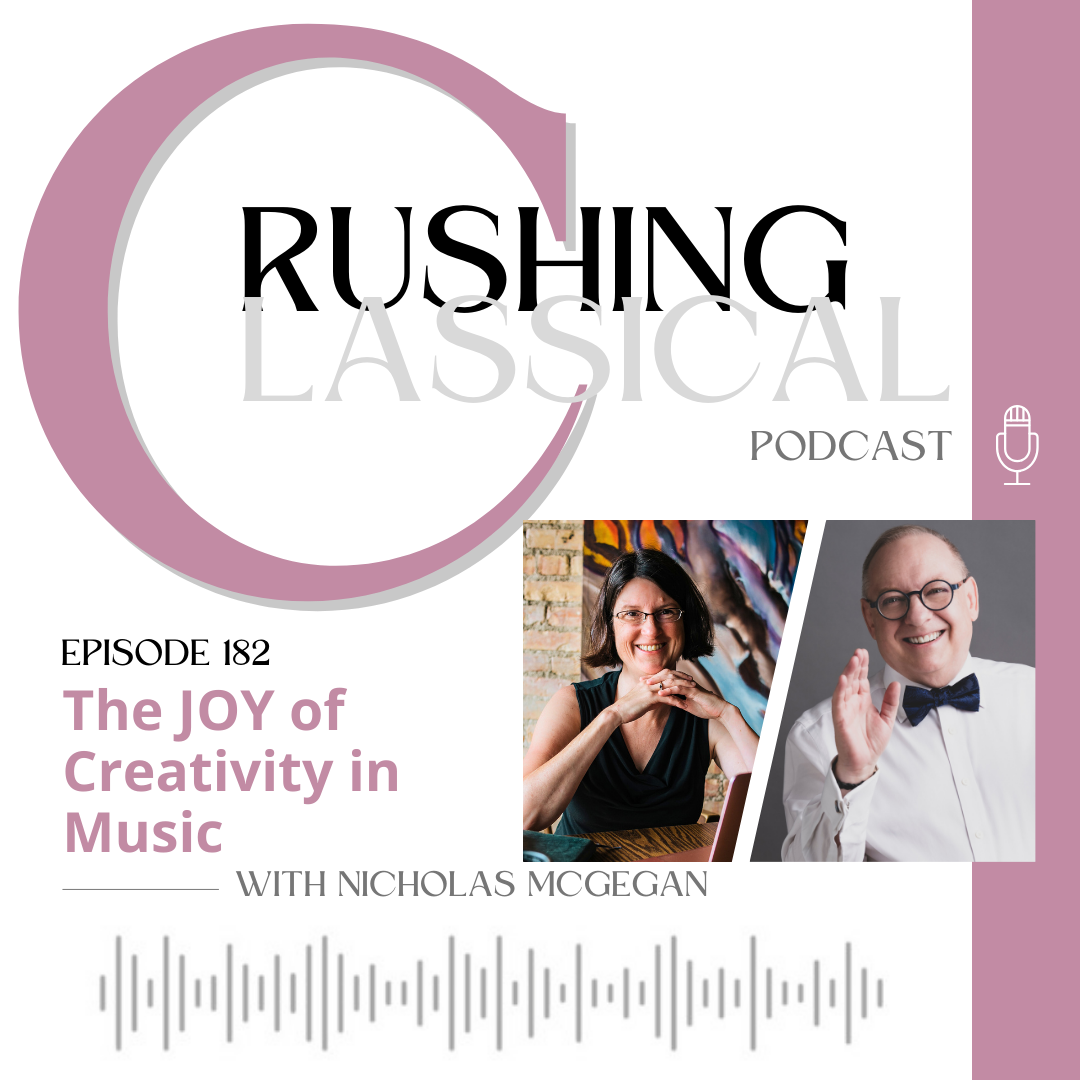
In Conversation: The Crushing Classical Podcast
McGegan recently sat down with Jennet Ingle for the Crushing Classical podcast to discuss his career trajectory, what drew him to Baroque and Classical repertoire, and how the early music movement has evolved over the past fifty years. The full conversation is available on YouTube.

Upcoming Appearances
December 20–21, 2025
Tucson Symphony Orchestra — Handel's Messiah
Tucson, AZ
January 25–26, 2026
Indiana University / Jacobs School of Music
Bloomington, IN
January 29, 31, 2026
Philharmonia Baroque Orchestra — Jews & Music
San Francisco, CA
February 6–8, 2026
Philharmonia Baroque Orchestra — Handel's Dixit Dominus & Rameau's La Guirlande
San Francisco, Berkeley & Stanford, CA
February 12, 14, 2026
Opera Lafayette — Queen of Hearts Valentine's Day Revel
Washington, D.C. & New York, NY
March 9, 2026
Chamber Music Society of St. Louis
St. Louis, MO
March 21, 2026
Cantata Collective — Bach's Ascension Oratorio & Ich hatte viel Bekümmernis, BWV 21
Berkeley, CA
April 16, 18, 19, 2026
Seattle Symphony — Mendelssohn: A Midsummer Night's Dream
Seattle, WA
April 24–25, 2026
Amarillo Symphony — Brahms’ Requiem & Arvo Pärt’s Da Pacem Domine