Frankfurt an der oder
Late last month, I spent a delightful week in Frankfurt. No, not the famous one with the airport and the Börse stock exchange. Instead, I was in the other Frankfurt which is about as far east in the country as you can get without crossing into Poland. It is a much smaller city on the banks of the River Oder which now forms the border between Germany and Poland although that is a fairly recent one. Here is a print of how it looked several hundred years ago:
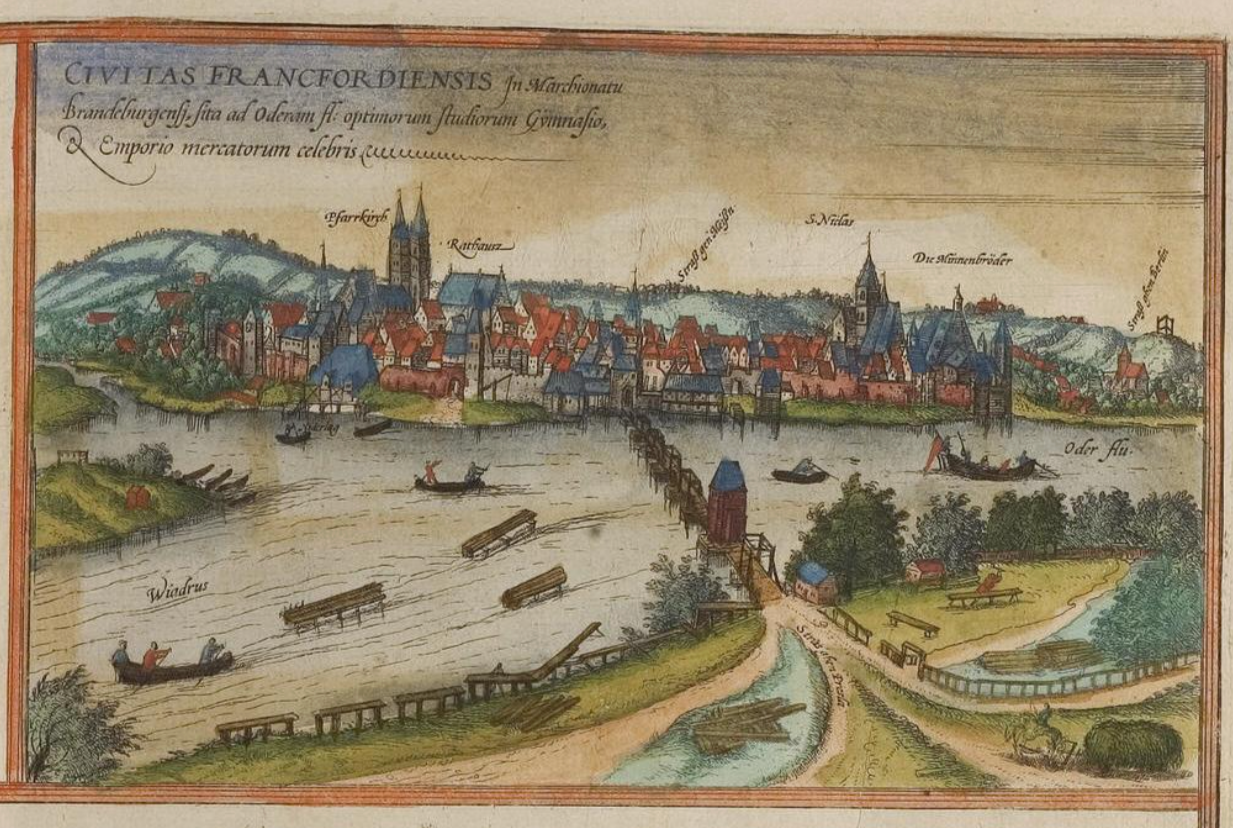
View of the city of Frankfurt (Oder). Colourised copperplate engraving by Frans Hogenberg from the book "Civitates Orbis Terrarum" from 1572
I have visited two other places on the west side of the river. To the north is Stettin which is now in Poland and renamed Szczecin. It has a magnificent castle, where the Tsarina Catherine the Great was born and a truly glorious new concert hall that I have already written about.
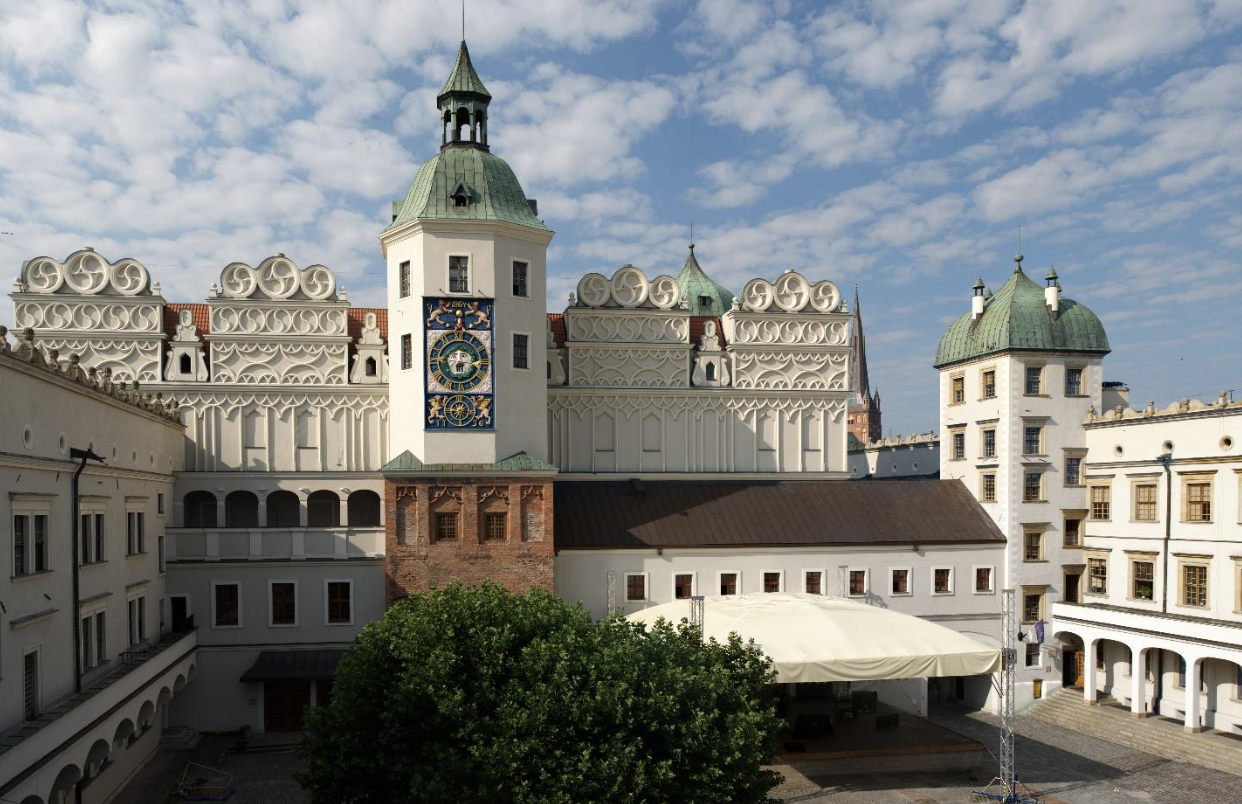
The Ducal Castle, Stettin
To the south of Frankfurt, I gave a concert in Görlitz, a beautiful city with a very impressive church and many fine old buildings. The town often features as the backdrop to films that most famous of which is The Grand Budapest Hotel. The interior of the hotel is actually an old department store which still retains its glorious Art Deco character:
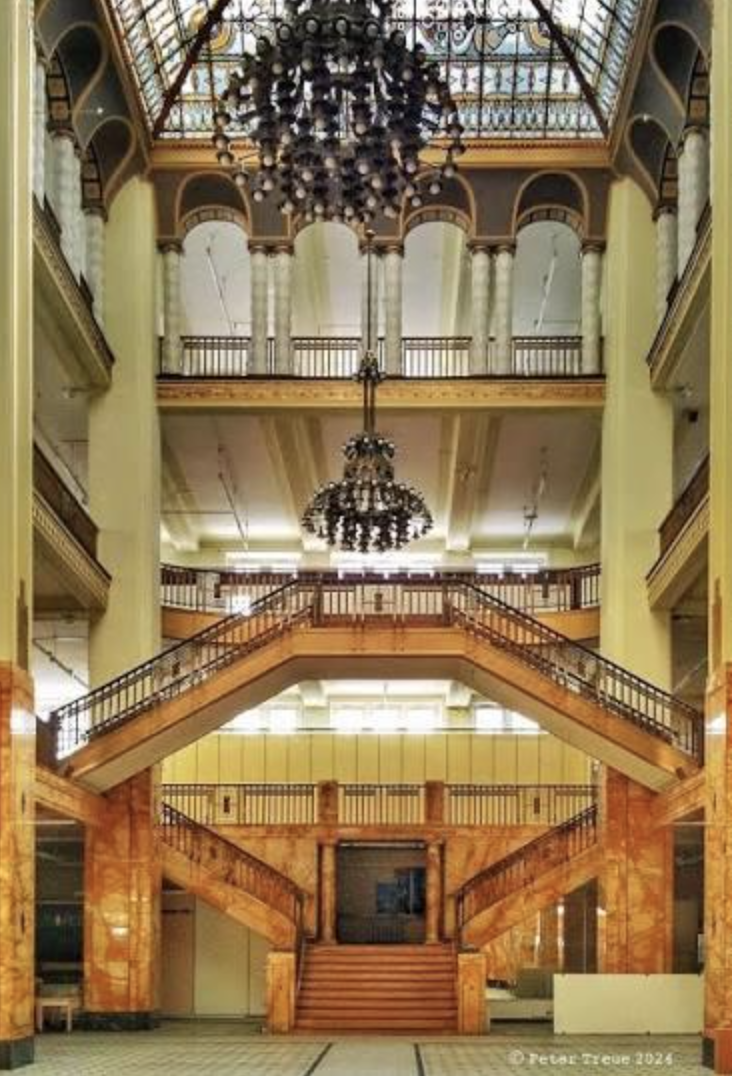
The Warehouse, Görlitz. Peter Treue 2024.
Much closer to Frankfurt is the town of Bad Muskau which is home to one of the most magnificent princely gardens in the whole of Germany. It was laid out in the English style by the Prince of Pückler-Muskau shortly after the end of the Napoleonic Wars:
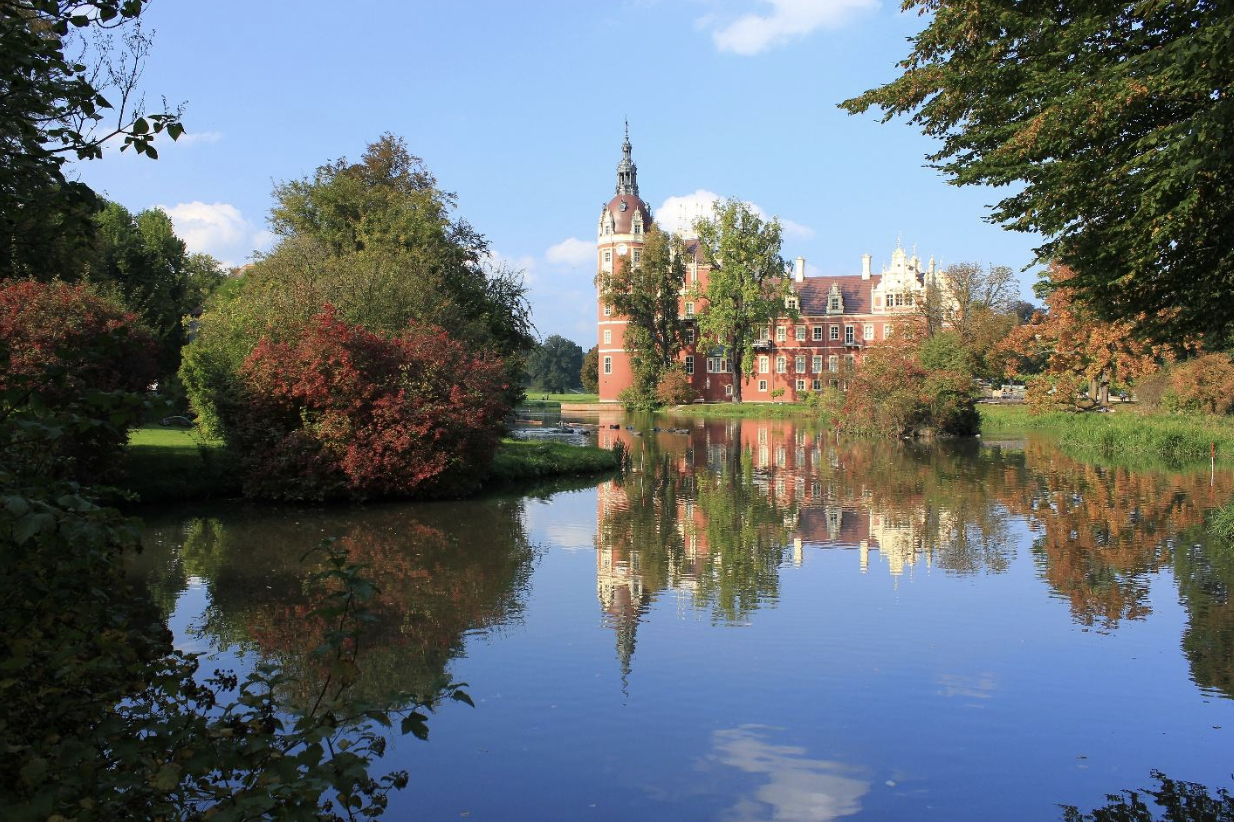
The Castle and Gardens. Bad Muskau. CC Kora 27
Sadly, I will have to save visiting this amazing place for a future time, perhaps a return invitation to Frankfurt.
Frankfurt is an old Hanseatic city which traded in goods travelling up and down the Oder. It had many fine buildings most of which were destroyed in 1945. Those that do survive or have been rebuilt are in the beautiful, even whimsical style of other Hanseatic, North German cities. Here is the town hall:
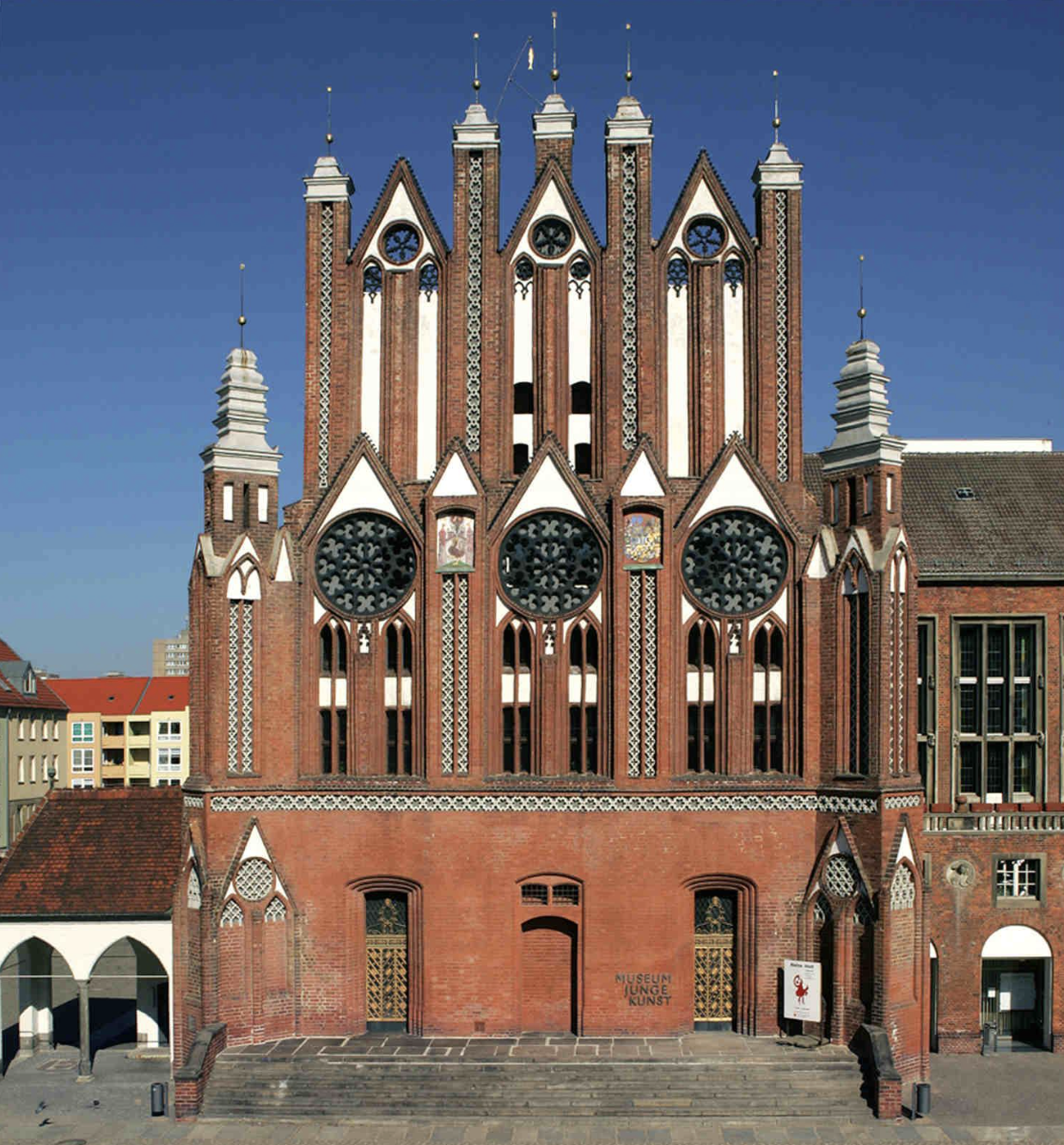
The City Hall. Frankfurt (Oder). Photo Winifried Mausoff
The concert hall was once a Franciscan monastery and is named after C.P. E Bach who studied law at the university here from about 1734 to 1738.
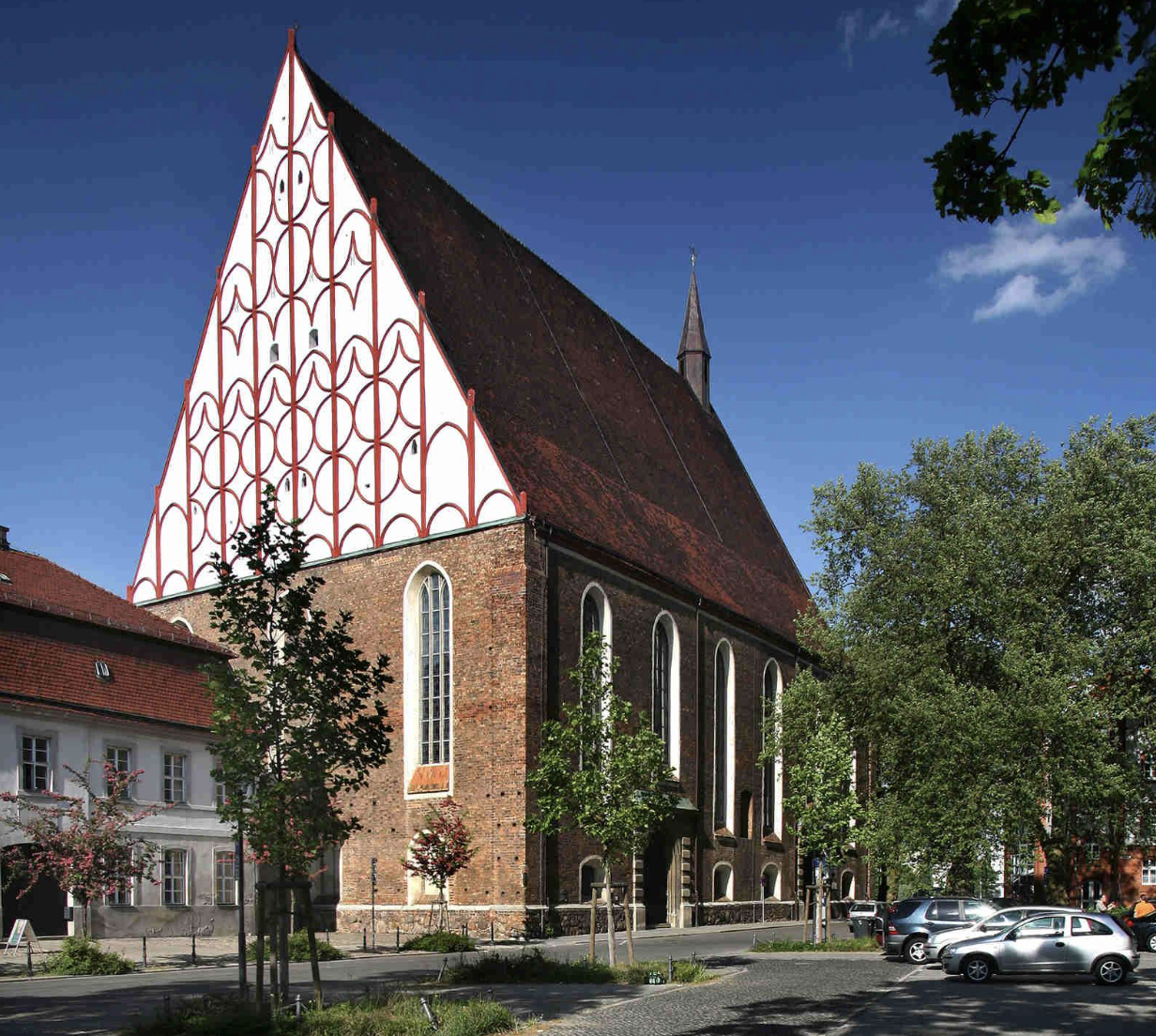
C. P. E. Bach concert hall Frankfurt (Oder). Winifried Mausoff
It looks terrific inside too:
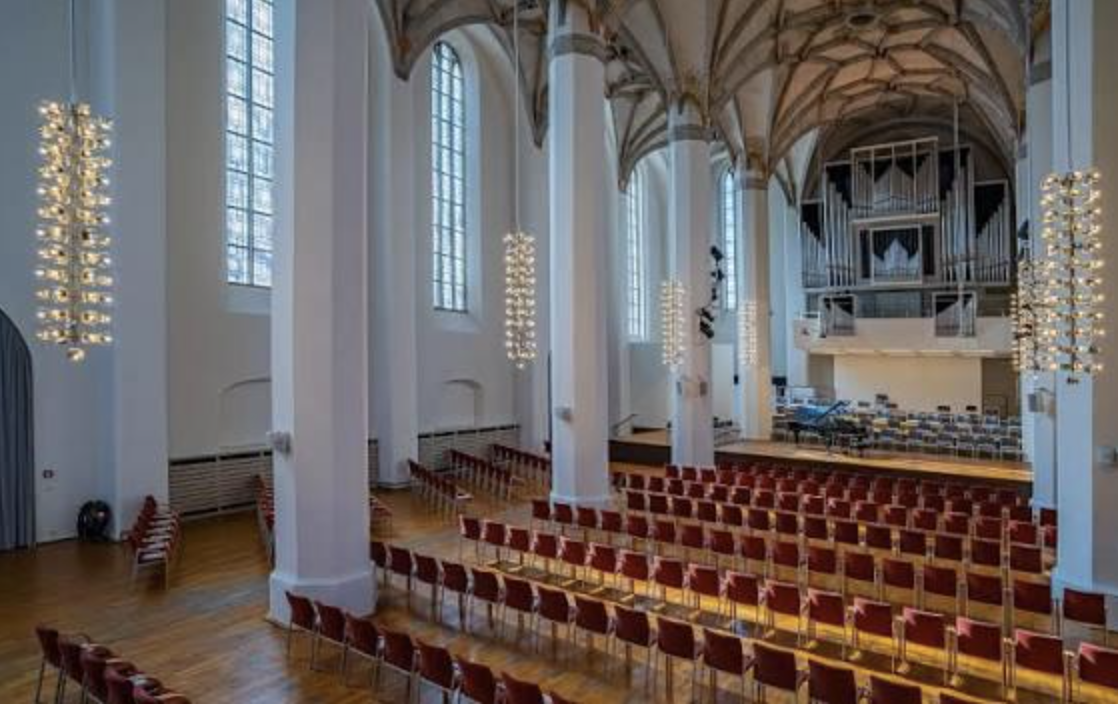
The concert hall interior. Ivo Wittmann.
I wish that I could tell you how much I enjoyed performing there, but, alas, the place is currently closed for a major restoration project and will not reopen for several years. Instead, we performed in a conference and exhibition centre a little out of town. As you might expect, the substitute hall did not have the atmosphere of the proper concert hall, though the sound was better than I expected. The orchestra is very good and it was great fun to work with them.
Of course, ‘all work and no play’ would make me a rather dull boy. Every afternoon on some beautiful sunny early autumn days, I would wander around town, ‘flanieren’ I should say in German. My evenings were mostly free and luckily, there was a terrific place close to my hotel called the Café am Kleistpark. (Heinrich von Kleist (1777-1811) is the local literary hero). My favourite dish there was their Berlin style calf’s liver which is served with onions and apples. I know that there are those with squeamish palates who baulk at the thought of eating offal. But I can assure you that this dish is glorious. The apples provide a perfect touch of sweetness. It went very well with a dry Riesling from near Dresden.
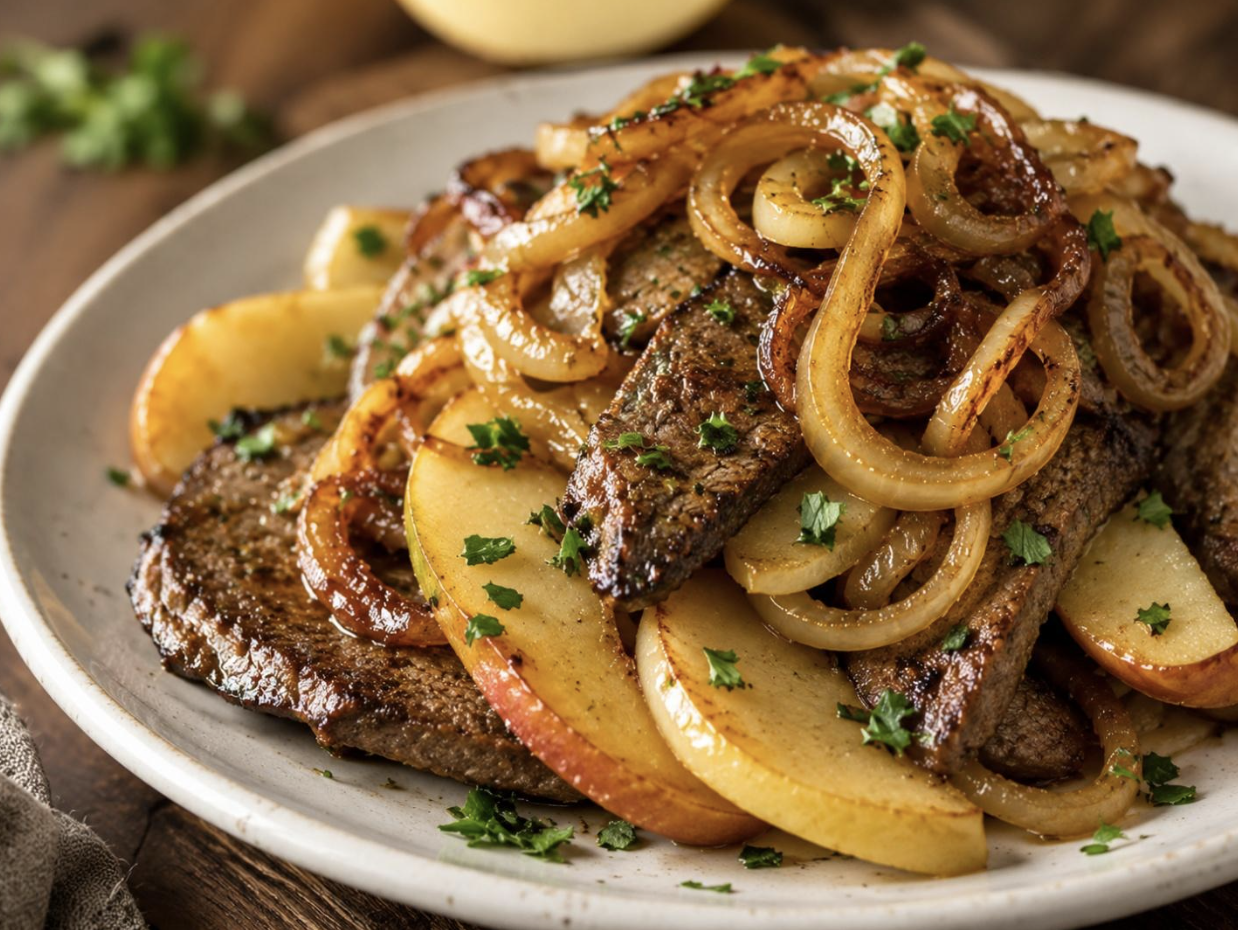
Berlin style calf’s liver
Ingredients
4-6 slices beef or calf liver
2 apples
2 onions
2 tbsp. butter
2 tbsp. Butterschmalz or butter
¼ cup flour
½ tbsp. salt
½ tsp. pepper
1 tsp. marjoram
Instructions
Peel, core the apples and cut them into thin slices.
Add to a bowl and sprinkle with lemon juice.
Peel and cut the onions into halves, then slice them finely.
Melt butter in a pan and fry the apples for a couple of minutes and set aside.
In the same pan fry the onion slices and fry until soft and brown.
In the meantime, rinse the liver and pat dry with a paper towel.
Add the flour to a shallow plate and coat all liver slices on both sides.
Heat Butterschmalz or butter in a large pan on medium high and fry liver on both sides.
Sprinkle with marjoram and season with salt and pepper.
Serve with apple and onion slices and mashed potatoes with brown butter or gravy.
It is best served with mashed potatoes.
In Germany, a matinée concert really does happen in the morning, at 11am to be precise. This is a perfect time for me and many other musicians. It is late enough in the morning, for one’s coffee to have kicked in and it is over by 1pm, just in time for lunch. Not only that, but since one has just performed, there is no problem about having a cocktail or a glass or two of wine. I was treated to a delightful meal at the place overlooking the river. Since it was a very German place, I ordered a local beer which is delicious, a little more tart than many of its type. My main course was a roulade with Klösse. These aremagnificent dumplings made with potato flour and though they have a very different shape are not unlike gnocchi. The addition of croutons gives them a lovely slightly crunchy texture. They are very good for mopping up the sauce from a Sauerbraten.
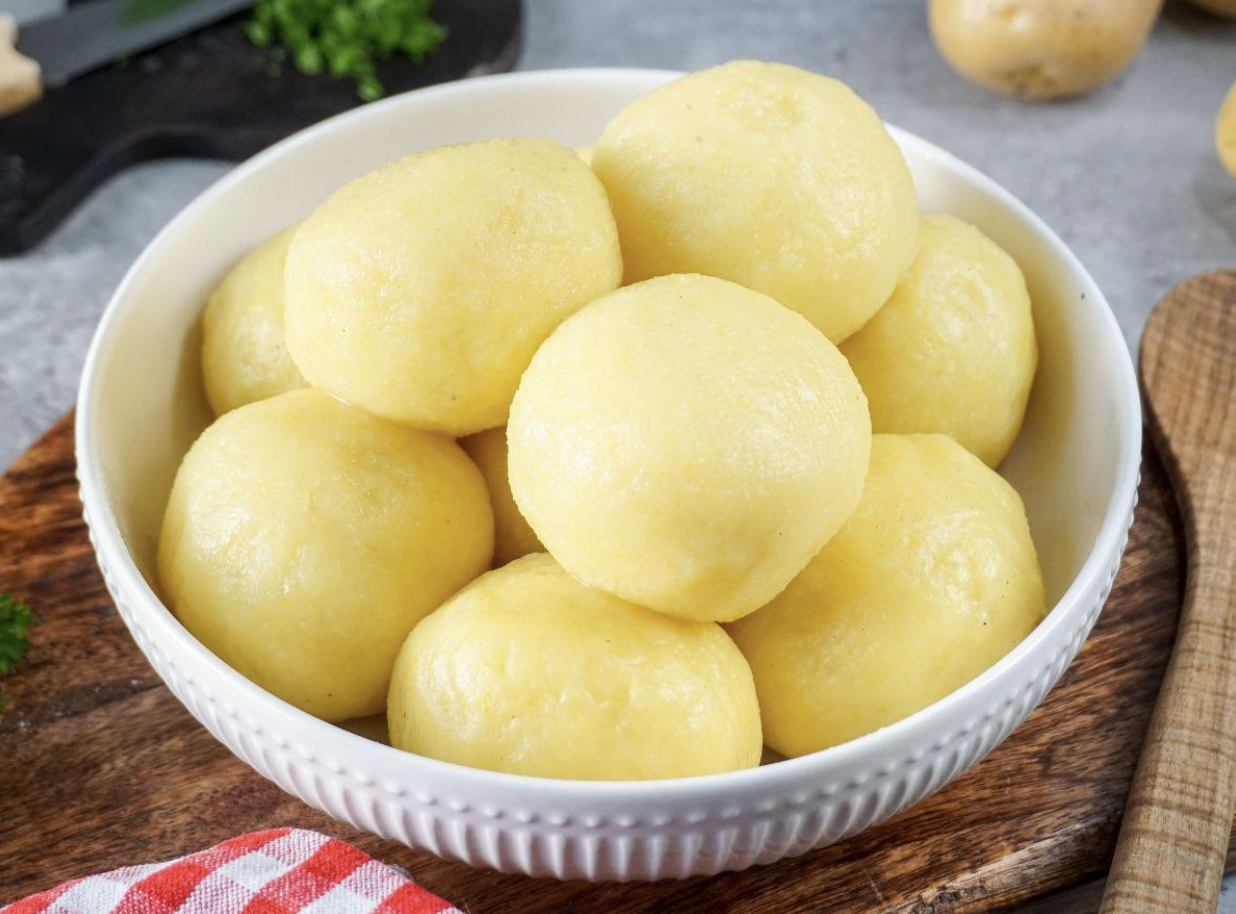
Klösse
Recipe by Jenny Böhme
Ingredients
2 lbs starchy potatoes (Russet or Yukon Gold)
1 cup potato starch (plus extra if needed)
1 large egg
1.5 tsp salt
A pinch of ground nutmeg
Optional: Small white bread cubes fried in butter (croutons) for the center
Preparation Steps
Boil the potatoes: Cook the potatoes in their skins in salted water for 20 to 25 minutes until tender. Drain, peel while warm, and pass them through a potato ricer. Let them cool for about 15 to 30 minutes.
Mix the dough: Add the potato starch, egg, salt, and nutmeg to the riced potatoes. Gently knead until a soft, smooth dough forms.
Shape the dumplings: Divide the dough into equal portions with wet hands. Press a few butter-toasted bread cubes into the center of each ball and seal the dough completely around them.
Simmer, do not boil: Bring a large pot of salted water to a gentle simmer (around 80–85°C; do not let it reach a rolling boil). Drop in the dumplings.
Cook: Simmer uncovered for about 20 minutes. They are done when they float to the top and spin slightly. Remove with a slotted spoon and serve warm.
My host at the lunch was born in Thüringen which is a couple of provinces west of Frankfurt; Bach was a native. He told me that his part of Germany is often considered the home of klösse even though they are enjoyed all over the country as well as neighbouring ones. In Heichelheim, just north of Weimar, is the world’s only Klossmuseum. He said that his mother made her klösse with lots of breadcrumbs and that hers were larger than the ones I ate.
Whenever I would visit Göttingen in November or December, I would always try to eat these klösse with roast goose and red cabbage. Heavenly!!!
On the subject to these dumplings I wish to add a couple of recipes from a little further afield. In Bavaria and Austria they make semmelknödle which are made from stale bread rather than using potatoes.
Ingredients for 4 people:
4 wheat bread rolls (around 250g total weight) (ideally a day old)
2 eggs (medium size, at room temperature)
200 ml (5 fl oz) milk - at least 3.5% fat.
1 large onion, (about 150 g- 5.2 oz)
A bunch of parsley (about 30 g/ 1 oz)
2 tablespoon butter
1 teaspoon salt
Pepper
50 g (1.7 oz) bacon (optional).
You might need additional:
breadcrumbs
milk
Semmelknödel Recipe
Chop the bread roll into small cubes about 1 cm. Make sure you chop them small, as larger chunks will take longer to soak. Mix it with 1 teaspoon salt.
In a saucepan or microwave heat the milk. The milk should be hot but don't bring it to boil. Pour it over the bread cubes.
Peel and finely cube the onions. Cube the bacon (if using). Finely chop the parsley. Heat the butter in a frying pan and fry the onion (and bacon if using) until the onions are translucent. Add them with the parsley to the bread mix.
Remove from the heat and add to the bread mixture. Mix all the ingredients with a spoon and leave it to rest for 10-15 minutes.
In the meantime, you can heat up a large pot (at least 5 ltr) of water with 1 teaspoon of salt.
Beat the eggs and add them to the mixture. Season the mixture with salt and pepper to taste.
Now it is time to roll up your sleeves. Make sure your hands are clean Knead the mixture with your hands. If the dumpling dough is too soft, add some breadcrumbs. If you find it to dry add a little milk.
Form your Knödel with wet hands to make 8-10 balls, depending on which size you prefer. My trick is to use an ice cream scoop to measure equal quantities. Press the balls with the palms of your hands so they are nice and compact. Try to shape a nice smooth ball, with no cracks and bulges as these might cause the Knodel to fall apart when cooking.
Once the water in your saucepan begins to boil, lower the heat. The dumplings are not supposed to be boiled, only simmer. If you place the Knodel into boiling water, they are more likely to lose shape and fall apart. Leave to simmer for about 20 minutes before removing them with a slotted spoon. - if you are doing this recipe for the first time, I would recommend doing a test Knodel - to check the consistency of the bread balls. You will know your Semmelknödel are done when they swim to the top.
Knödle, the Bavarian and Austrian word for klösse are also stuffed with either a savoury or sweet filling.
A very different kind of knödle is the germknödle which is made from flour and yeast. They are stuffed with jam and loads of poppyseeds. I remember these so fondly when I stayed with a wonderful family in Burgenland, south east of Vienna.
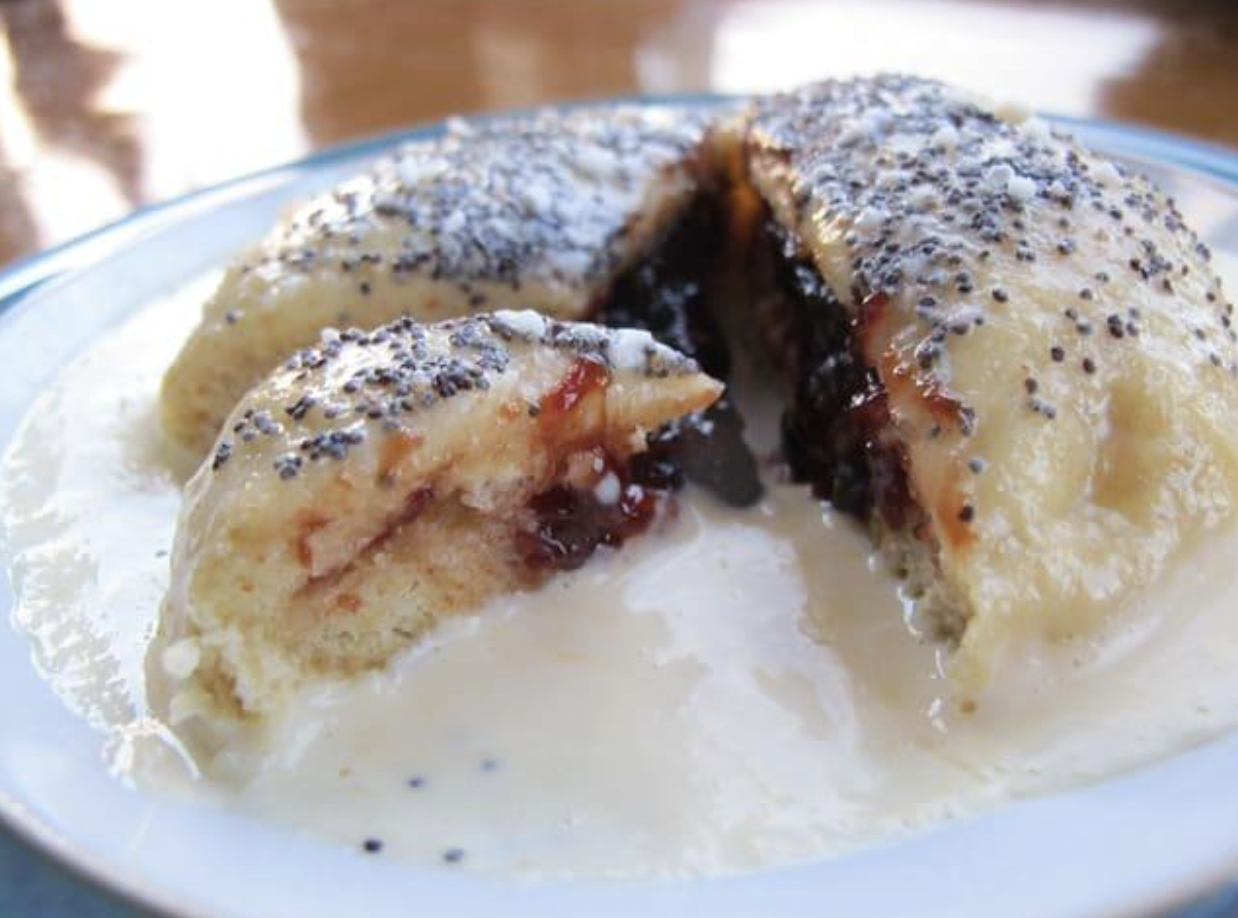
Germknödel dough
Recipe from ‘The Bread she Bakes’ by Pam.
Ingredients
For the steamed yeast dumplings
500 g strong white flour
7 g dried yeast
1 tsp salt
65 g sugar
70 g butter melted
250 g whole milk warmed
1 egg yolk
1 egg
1 lemon zest
Vanilla seeds from 1/2 vanilla pod or 1/2 tsp vanilla extract
For the filling
300 g Powidl
1 tbsp rum
Powidl
To serve
150 g poppy seeds ground
Icing sugar
Homemade vanilla sauce
Instructions
How to make Germknödel
Combine all dumpling ingredients and knead for about 10 minutes. You should have a soft, smooth, workable dough – not too sticky and not too dry.
Place the dough in a plastic bowl, cover and leave to rise somewhere warm for an hour or two until it has doubled in size. How quickly the rise happens depends on the temperature in the room, so be patient in case it takes a little longer.
In a small bowl, mix Powidl and rum.
Lightly flour a clean work surface and turn out the dough.
Punch down the dough, form the dough into a sausage shape and divide into 10 pieces with your dough scraper.
Flatten each piece with your hand.
Place a teaspoon of Powidl mixture into the centre of the flat round dough piece.
Bring up the sides of the dough around the plum jam and seal well by pinching the edges.
Place each dumpling onto the floured work surface or baking sheet, cover with a dish towel and leave to prove for about 30 minutes to 1 hour. The Germknödel should have visibly risen before you continue.
Prepare the vanilla sauce while you wait.
Bring a large pan of water to the boil and use a steamer (I use a bamboo steamer) lined with baking paper to steam the dumplings for 15 minutes. I can fit four dumplings into my steamer at a time. Make sure you cover the steamer with a lid.
If you don’t have a steamer, you can use a cotton dish towel which you put over the pan. Secure it with twine and make sure the cloth isn’t exposed to the heat source. Place the dumplings onto the cloth and cover with a second pot.
Serve and enjoy straight away. Pour over hot vanilla sauce and sprinkle with a mix of ground poppy seeds and icing sugar.
Finally, another of my favourites from Austria is Marillenknödle which are not only delicious but addictive:
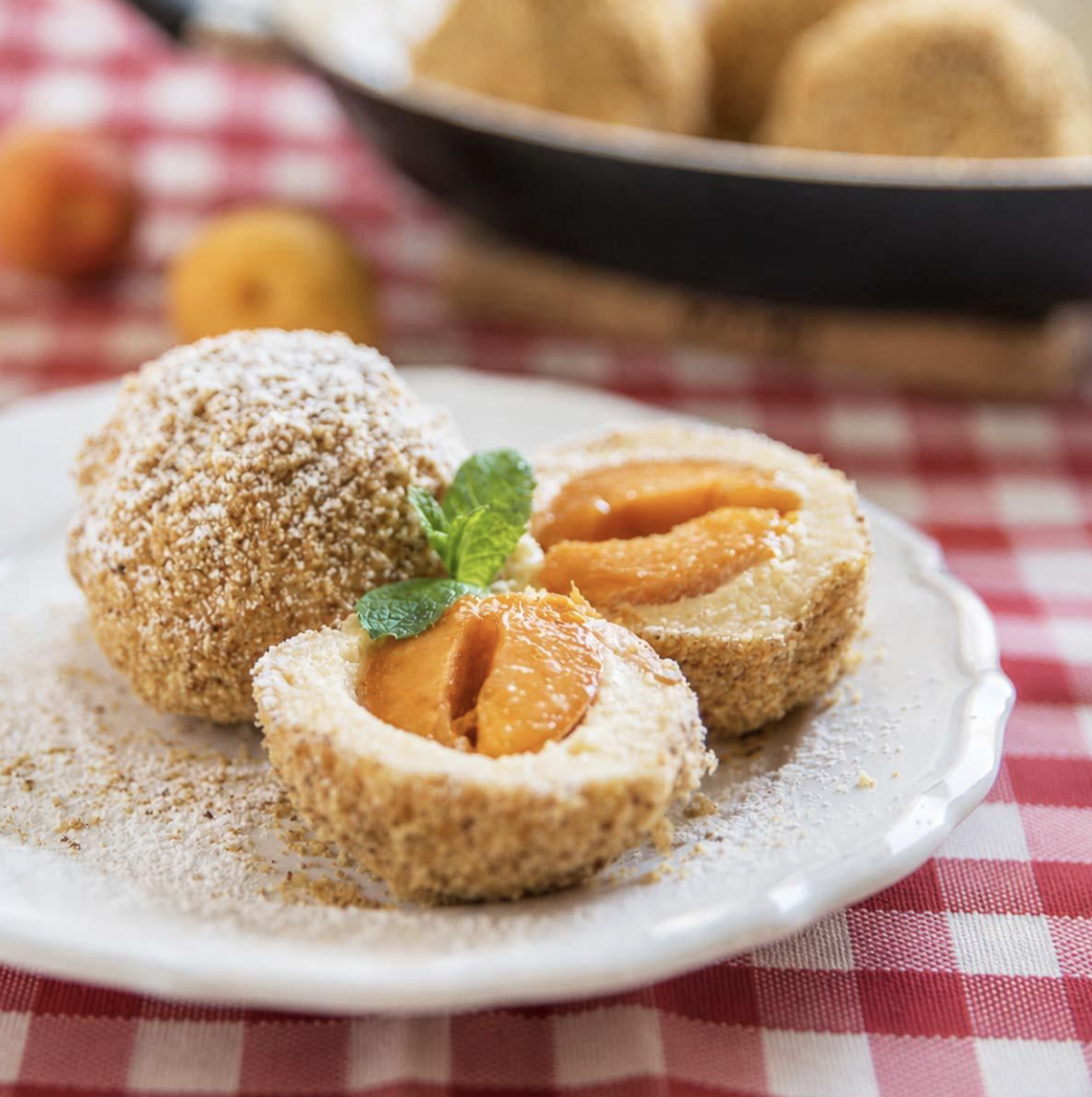
Marillenknödle. Photo: Adobe Stock/A_Lein
Ingredients
for the dough:
4 tablespoons butter 2oz/60g, soft
1 tablespoon granulated sugar
1 teaspoon vanilla extract
pinch of salt
1 cup cream cheese or Topfen 8oz/225g, cold
1 large egg cold
1 cup flour 4.5oz/130g, + more for shaping the dumplings
additionally:
8 small or medium apricots or 6 large apricots
8 sugar cubes
for the breadcrumb topping:
2 tablespoons butter
1/2 cup breadcrumbs 2oz/55g
2 tablespoons light brown sugar or granulated sugar
a big pinch of cinnamon
Cook Mode
Prevent your screen from going dark
Instructions
Make the dough:
Add the soft butter, sugar, vanilla extract, and salt to a medium bowl and whisk until combined (or just stir with a spatula or a spoon).
Add the egg and cheese, whisk until combined (lumps are fine).
Add the flour and stir with a spatula/spoon until combined. Don't stir for too long. The dough should be slightly sticky. If the dough is very very sticky (this will depend on the kind of cheese you've used) you can add 1-2 tablespoons of flour, but remember it will be much easier to handle after it has rested in the fridge. The dough should not be too dry and completely not sticky.
Scoop out the dough from the bowl onto a piece of plastic foil. Wrap the dough in plastic foil and form a round disk. Put in the fridge for 30 minutes (or longer, even overnight).
While the dough is chilling, prepare the apricots and the breadcrumb topping.
Apricots:
Cut the apricots in half and remove the stone.
Place a cube of sugar in place of the stone, press the two apricot halves together until the apricot closes. Set aside.
Make the breadcrumb topping:
Melt the butter in a medium pan, when it’s bubbling add the breadcrumbs.
Cook over medium-low heat, stirring very frequently, until the breadcrumbs are golden brown in color (be careful, they can burn quickly).
Take the pan off the heat and stir in the sugar and cinnamon.
Shape the dumplings:
Take the dough out of the fridge, sprinkle it with flour, and divide with a knife or a bench scraper into 8 parts (if you have very large apricots, divide the dough into 6 parts).
Sprinkle your counter or a silicone rolling mat with some flour. Place one part of the dough on the surface and sprinkle it with some more flour. Dust your hands with flour. Flatten the piece of dough and take it in your hand. Place one apricot in the middle of the dough and press the dough around the apricot, seal well. You should not be able to see the seam. Place the dumplings on a floured plate.
Cook the dumplings:
Cook the dumplings in a large amount of salted water, about 4-5 dumplings at a time (a large and wide pot is preferred). Throw them into boiling water and cook for about 12 minutes (from the moment you've put them in water). Reduce the heat to medium-low, the water should only simmer. After a couple of minutes, try to stir the dumplings carefully with a spoon as they tend to stick to the bottom of the pot.
Take the cooked dumplings out of the water with a slotted spoon, drain well.
Coat the dumplings with the breadcrumb sugar topping:
Place the hot dumplings in the pan with the breadcrumb topping. Roll the dumplings in the breadcrumbs until coated on all sides.
I think that is enough fattening food for one posting. On the subject of knödle, I haven’t even touched the surface or given recipes from further east in Europe but watch this space……..
I really enjoyed my week in the ‘other’ Frankfurt which is only an hour on the train from Berlin. The whole region is well worth a visit and I hope that I can return to see more and to of course sample more goodies.
Auf wiedersehen!